
CBD COP17 · Field report
pta brings youth biodiversity action to COP17: from observing nature to public participation
At a COP17 press conference in Yerevan, pta and partners shared 14 youth biodiversity action cases, a soundscape citizen science programme and research on communities in the Global South.
Yerevan, 26 October 2026 — During the seventeenth meeting of the Conference of the Parties to the Convention on Biological Diversity (COP17), pta Plant Technology Alliance hosted a press conference in the Armenian capital, Yerevan, on “From Observation to Action: Youth and Community Participation in Biodiversity Conservation”. The event introduced Youth Action for Biodiversity: Case Studies from China and, together with partners, presented “声景中国·深境计划” (described here as Soundscape China · Deep Nature Programme) and research on communities in the Global South.
Through case studies, a programme launch and research discussions, pta brought youth practices from China into an international exchange, showing different ways for people to move from learning about nature and contributing to scientific records to taking part in environmental decision-making.
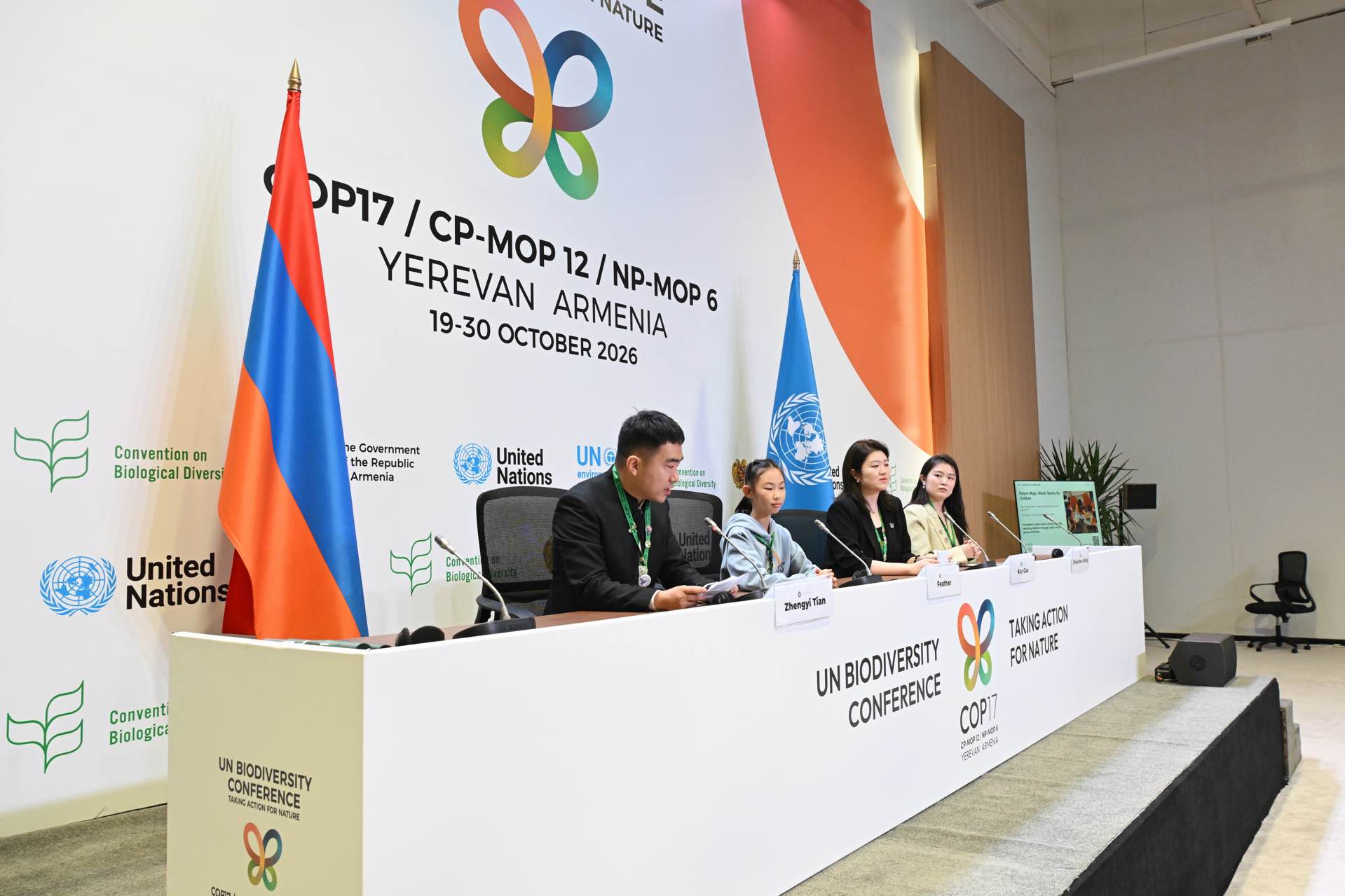
Making youth action experience visible
The event was held in the HATIS press conference room in the COP17 Blue Zone, with the All-China Environment Federation’s working committee for youth environmentally friendly action (中华环保联合会青少年环境友好行动工作委员会) as co-organizer. Joey Tian (Panda), a co-founder and board member of pta, moderated the event and opened by introducing Youth Action for Biodiversity: Case Studies from China, edited and published by pta.
Youth conservation action begins in many different ways: observing local birds, identifying native plants, offering nature education or taking part in ecological restoration. Through an open call for cases and bilingual Chinese–English editing, pta brought together practices led by different people in different places, providing concrete material for sharing experience. According to Joey Tian, the collection contains 14 case studies. It documents conservation initiatives started by young people themselves, as well as the ways that social organizations, education teams, businesses and communities support youth participation.
Topics include island ecology and local memory, the creation of campus microhabitats, urban nature education, river conservation, pollinator conservation and related product design. By connecting conservation issues with real people and specific actions, the collection also helps international readers understand how young people in China take part in biodiversity conservation through everyday life.
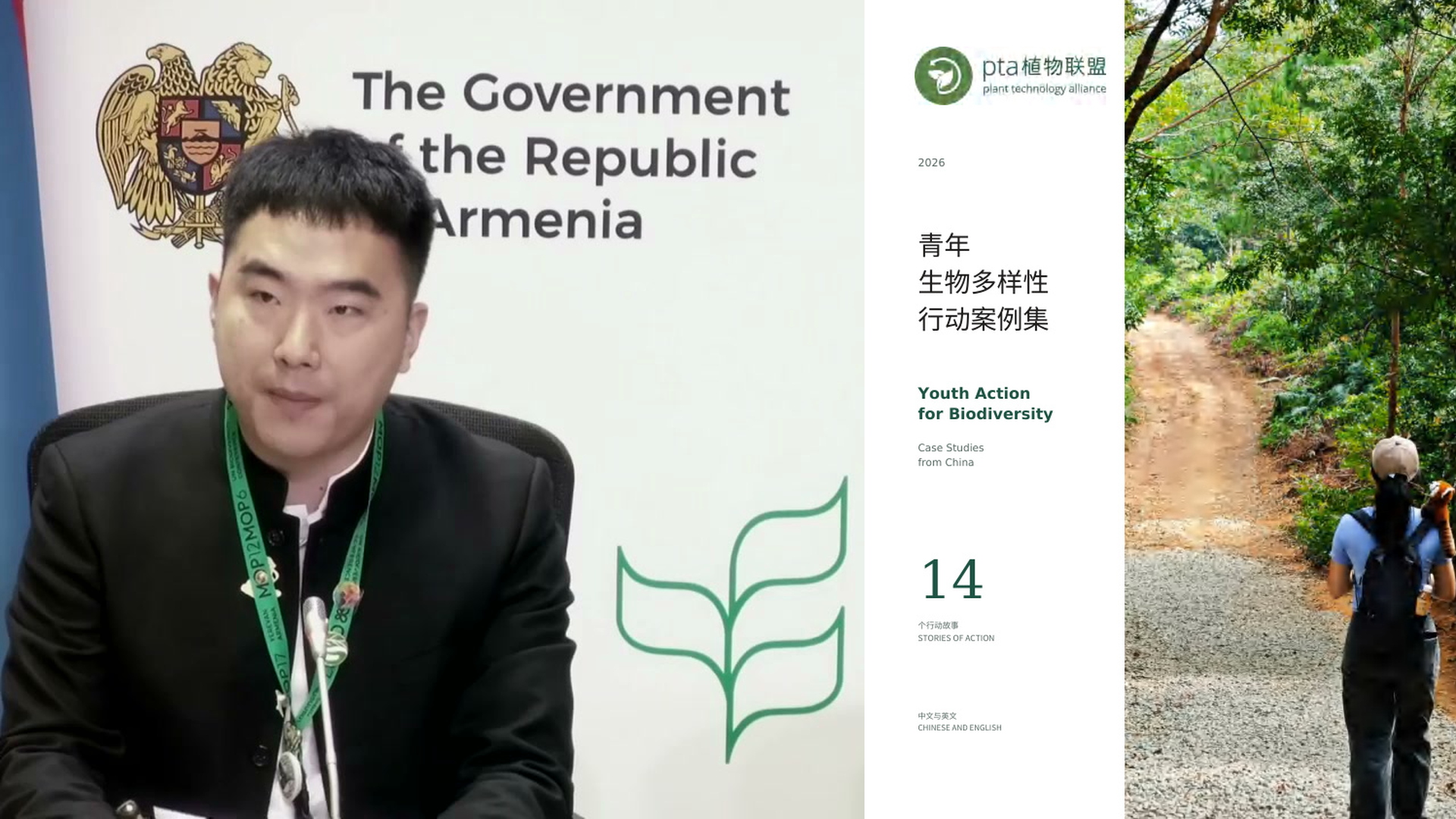
The case collection drew on organizations, teams and individuals from different parts of China.
Contributors included the Lantian social work service centre in Luqiao District, Taizhou (台州市路桥区蓝天社会工作服务中心) and Peng Jianing; Yu Jiayi (Panda) and Greater Bay Area NatureWalk; the Baopu institute for sustainable nature education (抱朴永续自然学院); swift conservation advocate Zhang Xuhan, whose nature name is “Feather”; Hangzhou Duoyangdao (杭州多样道), with “江河荟浙江翠”; EcoReadia (绿美阅行); the zero-waste promotion association in Longhua District, Shenzhen (深圳市龙华区零废弃促进会); Fu Hongchuan and Fenggu Group’s Bee Planet initiative (蜂谷集团·蜜蜂星球计划); Gu Maojun and action partners; Hangzhou Qinglülan Environmental Technology Co., Ltd. (杭州青绿蓝环境技术有限公司); practitioners working with native plants in Guangzhou; Rosetta Yu; Yunli Farm (云里农场); and Nature Magic Wand (pta Planet).
Protecting swifts with scientific understanding
Zhang Xuhan, an 11-year-old young guide from Beijing whose nature name is “Feather”, shared her experience with “守望雨燕行动”, a swift conservation initiative. A swift chick named Xiaoduanwu had accidentally fallen from its nest. After being rescued and returned to the nest, it successfully took flight on the sixth day. She said: “Simply liking animals is not enough. We need to care for them with scientific understanding.” The team is now developing a swift rescue kit, hoping to involve more young people in wildlife conservation informed by science.
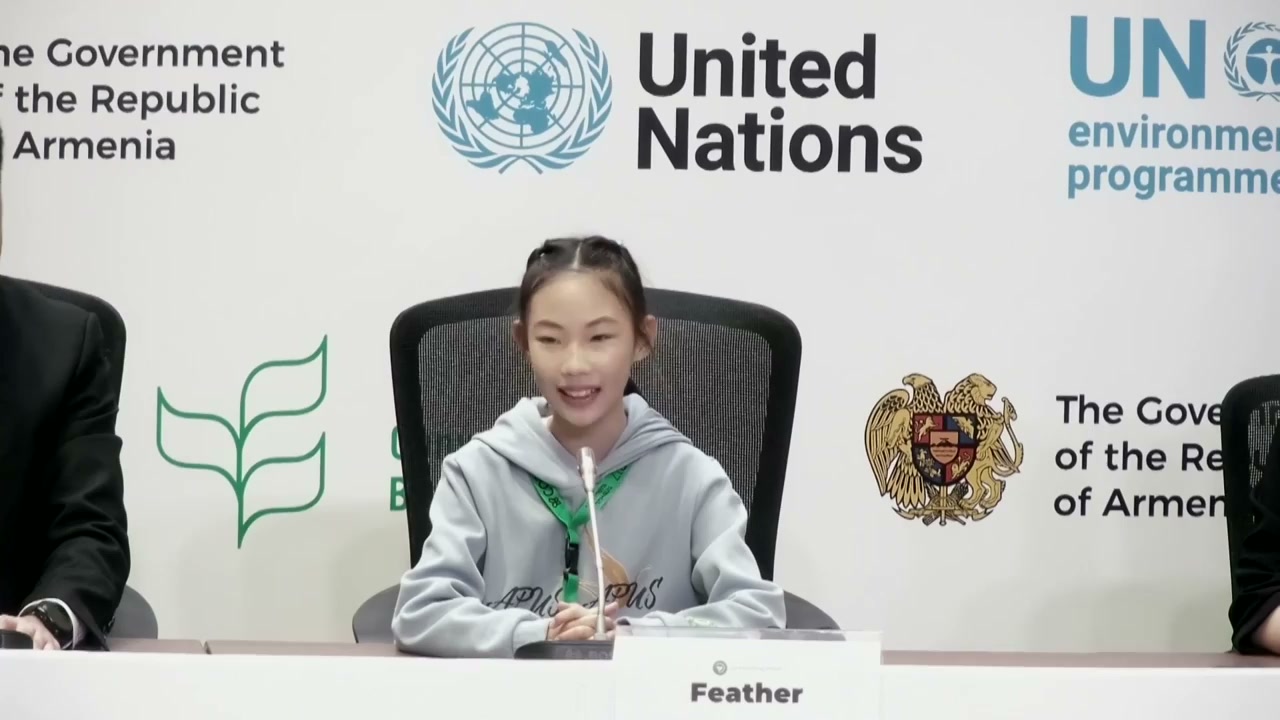
From nature observers to citizen scientists
After the youth case studies, the press conference turned to “声景中国·深境计划” (Soundscape China · Deep Nature Programme), for which pta is one of the organizations jointly inviting public participation. Gao Jinyi, executive director of the All-China Environment Federation’s working committee for youth environmentally friendly action, launched the programme under the theme “From Nature Observers to Citizen Scientists”.
Five organizations are jointly inviting people to take part: the Zhuque bird research institute in Kunming (昆明市朱雀鸟类研究所); the Shanshui nature conservation centre in Beijing’s Haidian District (北京市海淀区山水自然保护中心); the Friends of Nature environmental research institute in Beijing’s Chaoyang District (北京市朝阳区自然之友环境研究所); pta; and Nature Magic Wand. Their aim is to help nature observers participate in citizen science.
Gao Jinyi said that Soundscape China has established 250 monitoring sites across 31 provincial-level administrative divisions in China and collected approximately 4 million soundscape records, covering ecosystems including deserts, grasslands, rainforests and wetlands. The project brings monitoring data together in a national soundscape database and is also developing a mobile sound-recording application. Birdsong, frog calls and other natural sounds can thus become valuable material for studying patterns of species activity and assessing ecological conditions.
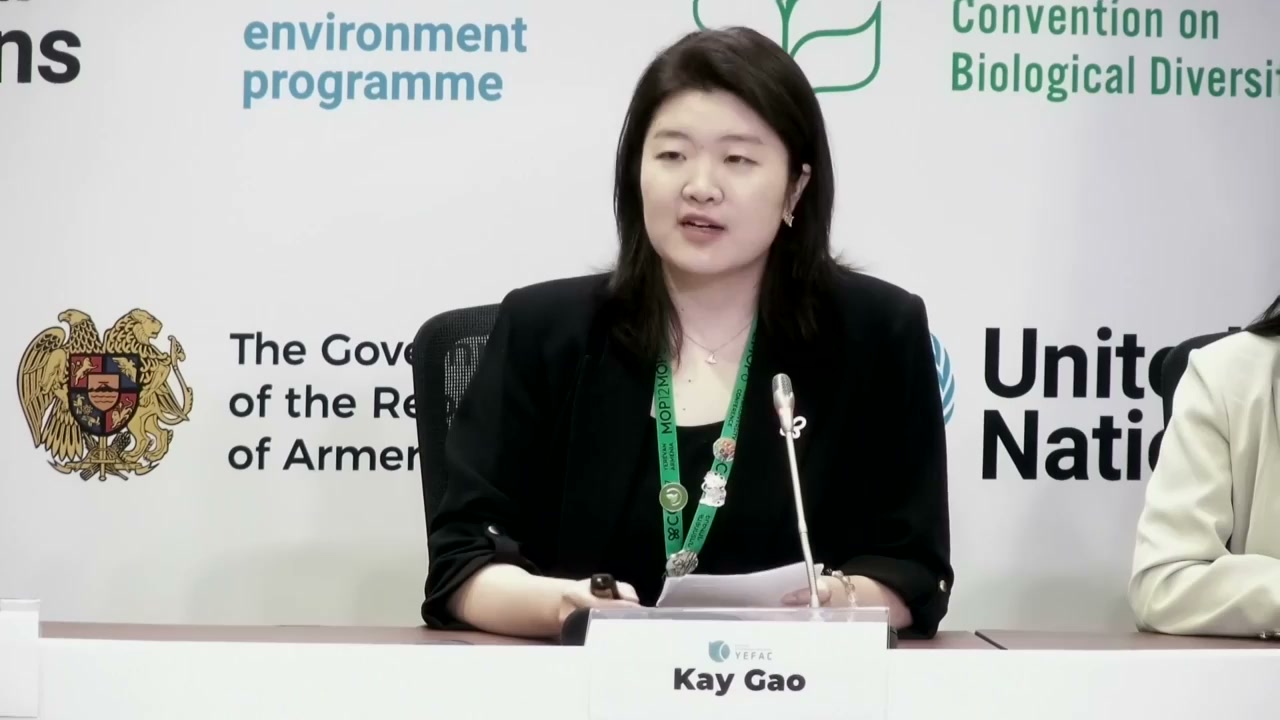
Deep Nature Programme has three strands of recruitment. It seeks nature education practitioners, birdwatching guides and others to form a core group of nature sound recordists, with training in recording techniques and identifying species by sound. It invites nature education organizations, protected areas, urban parks and campus ecological spaces to become partners in developing the programme. It also invites sound artists and visual creators to make artistic work using authentic soundscape recordings and share science with wider audiences.
Through professional training, the joint development of recording sites and public communication, the programme connects nature observation, long-term recording, scientific research and public participation.
The call runs from 1 November to 1 December. It will be followed by activities including skills training, field recording practice and the creation of original works. Plans include an annual soundscape archive and themed exhibitions for the public. Gao Jinyi also invited international partners to collaborate in soundscape monitoring, data sharing, joint research and environmental education.
Keeping communities involved throughout a project
Wang Chenchen, a young researcher at the University of Maryland and a representative of the Global Youth Biodiversity Network, spoke about environmental technology adoption and deliberation in Global South communities. Her presentation extended the discussion to how environmental technologies are actually used after reaching communities, people’s rights to participate, and responsibility for long-term operation and maintenance. The research was based on in-depth interviews with 28 local climate advocates in 14 Global South countries and has been published in Energy Research & Social Science.
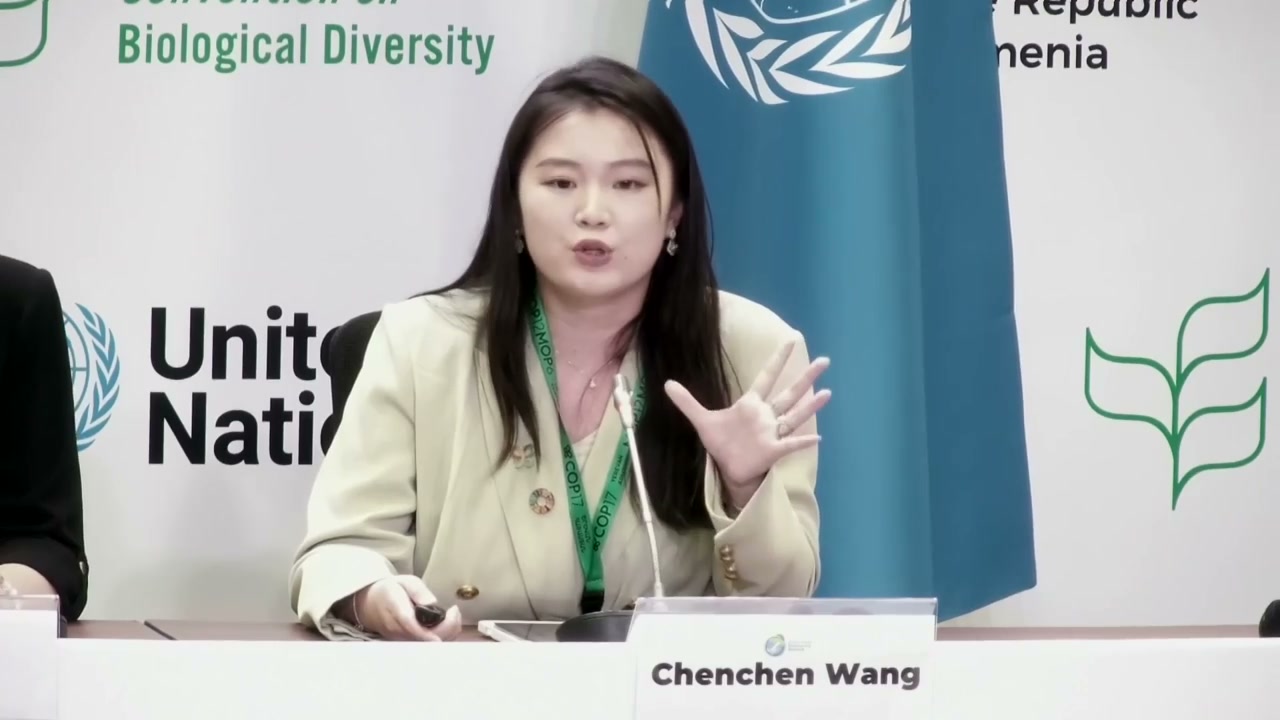
Wang Chenchen described an example reported by an interviewee: solar equipment donated to a community broke down after only three days of use. When new projects were later proposed to residents, community acceptance had fallen sharply. The case illustrates how equipment failure can erode residents’ trust in future cooperation. Maintenance support and the ability to respond to problems after technology is delivered are key measures by which communities judge whether a partnership is reliable.
Another interviewee described five households working together on a solar water pump tailored to their own needs. Drawing on this example, Wang Chenchen argued that projects should begin by understanding residents’ actual needs, then jointly agree on arrangements for equipment operation and maintenance, sharing costs and rules for use. She also described a practice in which homemakers were selected as energy advisers to share energy knowledge with their neighbours. She proposed that local experience gained through daily cooking, household care and equipment use should be included in project discussions to improve project design.
On communication support, she gave two practical examples: placing illustrated instructions on kitchen walls to help residents use solar cookers, and creating a community “question wall” to collect difficulties people encounter when using energy, with youth organizations following up with answers. She suggested that project budgets should include local communication, skills training, equipment operation and maintenance, and continuing feedback. Evaluations should go beyond counting equipment deliveries to consider whether equipment remains in use, how efficiently reported problems are addressed, and the environmental benefits actually achieved.
Wang Chenchen then applied lessons from the energy sector to community biodiversity monitoring. Does monitoring address local needs? Who decides where monitoring equipment is installed? Who interprets and uses the data? Who will continue to provide support after project funding ends? These questions, she argued, should all be included in a process of joint design among the parties involved. These conclusions came from interview research. The study did not measure technology adoption rates or evaluate the actual effectiveness of biodiversity monitoring.
From observation to sustained action
The press conference offered a concrete example of how pta connects youth action with public participation: bringing together and sharing local experience through a bilingual case collection; creating opportunities to participate in citizen science through the joint call for “声景中国·深境计划” (Soundscape China · Deep Nature Programme); and introducing community research perspectives at an international conference to discuss how action can receive long-term support.
From recording case studies to enabling public participation, pta is working with young people, social organizations, researchers and communities to explore how everyday interests and observations can develop into sustained biodiversity action supported by knowledge and collaboration.